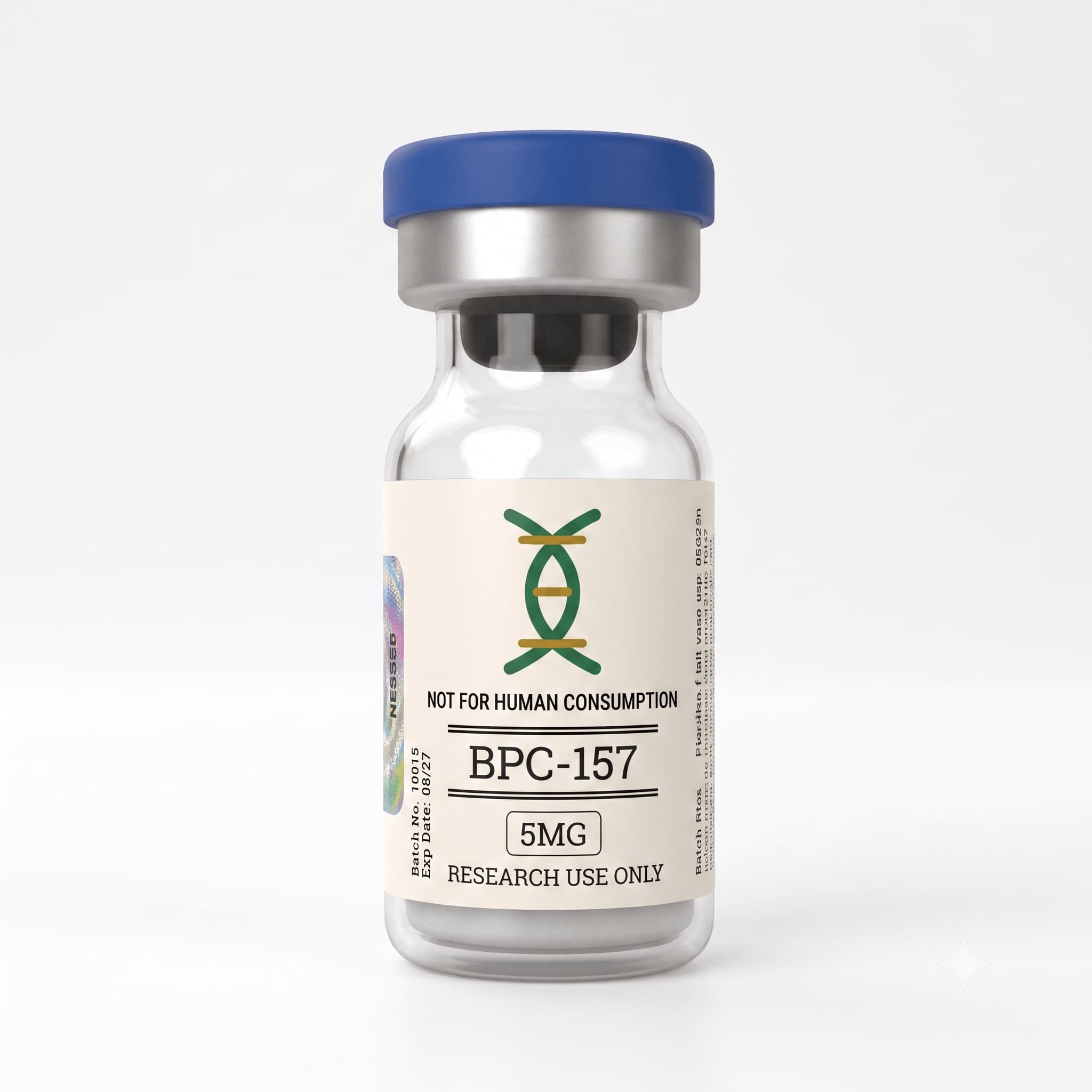
BPC-157 is a synthetic peptide composed of a 15–amino acid partial sequence derived from a protective protein identified in gastric juice. It is one of the most extensively referenced peptides in the recovery-research literature.
In published preclinical and animal-model studies, BPC-157 has been investigated in the context of tendon, ligament, muscle, and gastrointestinal tissue-repair pathways. Researchers have examined its proposed interactions with growth-hormone-receptor signaling and nitric-oxide pathways.
Specs: Identity: BPC-157 · Fill: 10 mg · Form: Lyophilized powder · Purity: ≥98% (HPLC) · Storage: -20°C, protect from light
For research use only. Not for human or veterinary use. Not a drug, food, or dietary supplement. Not for diagnostic or therapeutic use.
Preclinical Research & Case Studies
Mechanism: A synthetic pentadecapeptide derived from a protective protein in gastric juice. The preclinical literature associates it with angiogenesis (via VEGFR2 and the nitric-oxide system), collagen organization, and fibroblast activity in tissue-repair models.
- Chang, Tsai, Lin et al. (2011), Journal of Applied Physiology: Examined BPC-157 in a rat Achilles-tendon transection model paired with cultured tendon fibroblasts and identified dose-dependent activation of the focal adhesion kinase (FAK)–paxillin signaling cascade, which is involved in cell migration and survival.
Model: Sprague-Dawley rat Achilles model + cultured fibroblasts | Source →
- Achilles detachment study, Sikiric group (2006): After sharp transection of the Achilles tendon from bone, BPC-157 improved functional, biomechanical (load-to-failure, stiffness), and histological healing (better collagen organization, more type-I collagen) versus controls, and offset corticosteroid-impaired healing.
Model: Rat tendon-to-bone healing | Source →
- Perovic, Kolenc, Bilic et al. (2019), J. Orthopaedic Surgery and Research: A single intraperitoneal dose of BPC-157 was reported to improve the healing course of spinal-cord injury and support functional (tail) recovery relative to controls.
Model: Wistar rat spinal-cord-injury model | Source →
- Tendon-fibroblast gene study (2018): cDNA-microarray work found growth-hormone receptor among the most up-regulated genes in BPC-157-treated tendon fibroblasts, with dose- and time-dependent increases at mRNA and protein levels; added growth hormone increased fibroblast proliferation.
Model: Rat Achilles tendon fibroblasts (in vitro) | Source →
- Gjurasin et al. / Sikiric group (2009), J. Physiology and Pharmacology: In a rat sciatic-nerve transection model, BPC-157 produced faster axonal regeneration (denser, larger fibers; thicker myelin), higher motor action potentials on EMG, and an improved sciatic functional index, with autotomy absent versus controls.
Model: Rat sciatic-nerve transection | Source →
- Intestinal anastomoses review, Sikiric group (2024), Pharmaceuticals (17:1081): Synthesizes rat studies in which BPC-157 supported healing of numerous gastrointestinal anastomoses (esophagogastric, colocolonic, jejunoileal, ileoileal) and counteracted associated colitis, short-bowel, and sphincter dysfunction.
Model: Rat gastrointestinal anastomosis models | Source →
- Diclofenac-toxicity work (traumatic nerve-injury paper, 2009): BPC-157 counteracted combined gastrointestinal, liver, and brain toxicity induced by the NSAID diclofenac in rats, whether given intraperitoneally or orally in drinking water — consistent with its cytoprotective profile.
Model: Rat NSAID-toxicity model | Source →
Research stage: Evidence base is overwhelmingly preclinical (primarily rat models); robust human efficacy trials have not been completed.