✦ Free shipping on U.S. orders over $150  ·  Use code WELCOME10 for 10% off your first order  ·  Powder only, research grade ✦
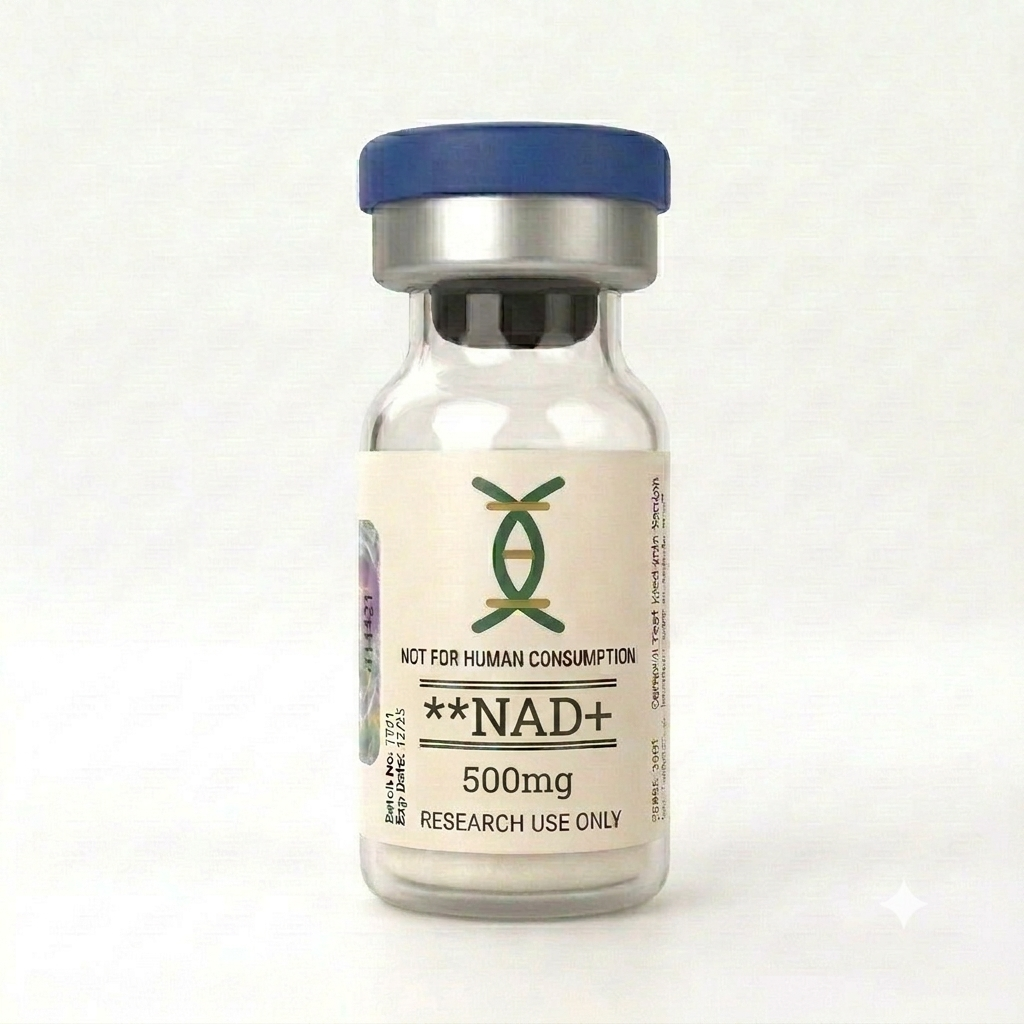
NAD+ — 500 mg

Precursor:

NAD+ — 500 mg

A foundational metabolic coenzyme and research reagent used across cellular-energy and aging-research studies.

$70.00

Description

NAD+ (nicotinamide adenine dinucleotide) is a coenzyme central to cellular metabolism and redox biology, present in all living cells.

It is a foundational research reagent in studies of cellular energy metabolism, sirtuin activity, DNA-repair pathways, and aging research, and is one of the most widely used reagents in metabolic-research settings.

Specs:  Identity: NAD+ (nicotinamide adenine dinucleotide) · Fill: 500 mg · Form: Lyophilized powder · Purity: ≥98% (HPLC) · Storage: -20°C, protect from light

For research use only. Not for human or veterinary use. Not a drug, food, or dietary supplement. Not for diagnostic or therapeutic use.

Preclinical Research & Case Studies

Mechanism: A central metabolic coenzyme and required cofactor for the sirtuin and PARP enzyme families. NAD+ levels decline with age, which the literature links to reduced sirtuin activity and mitochondrial function.

  • Zhang et al. (2016), Science (352:1436–1443): Reported that NAD+ repletion improved mitochondrial and stem-cell function and enhanced life span in mice — a widely cited demonstration of NAD+’s role in aging biology.
    Model: Aged mouse model | Source →
  • Mouchiroud et al. (2013), Cell (154:430–441): Showed NAD+ levels are reduced in aged mice and C. elegans, and that genetic or pharmacological restoration of NAD+ prevents age-associated decline through mitochondrial-UPR and FOXO signaling.
    Model: Mouse and C. elegans models | Source →
  • Yoshino et al. (2011), Cell Metabolism (14:528–536): Found the NAD+ intermediate NMN addressed the pathophysiology of diet- and age-induced diabetes in mice, restoring NAD+ and improving glucose metabolism.
    Model: Diet- and age-induced diabetic mice | Source →
  • Gomes et al. (2013), Cell (155:1624–1638): Reported that declining NAD+ induces a pseudohypoxic state that disrupts nuclear-mitochondrial communication during aging, reversible by raising NAD+.
    Model: Mouse aging model | Source →
  • Das et al. (2018), Cell (173:74–89): Reported that impairment of an endothelial NAD+/H2S signaling network is a reversible cause of vascular aging — raising NAD+ (with NMN) plus exercise restored the capacity to generate new blood vessels in aged mice.
    Model: Aged mouse vasculature | Source →
  • NMN + exercise study (2025): In aged (85-week) mice, combined NMN supplementation (300 mg/kg/day) plus aerobic exercise significantly improved maximal strength and aerobic endurance versus aged sedentary controls, with changes in NAMPT and SIRT1 expression.
    Model: Aged C57BL/6J mice (NMN + exercise) | Source →

Research stage: Foundational NAD+ biology is established in animal and cell models; much intervention data uses precursors (NMN, NR) rather than NAD+ directly.

Related Products

A mitochondria-targeting tetrapeptide studied for its association with cardiolipin and the inner mitochondrial membrane.

A mitochondrial-derived peptide studied in metabolic-regulation and cellular-stress-response research.