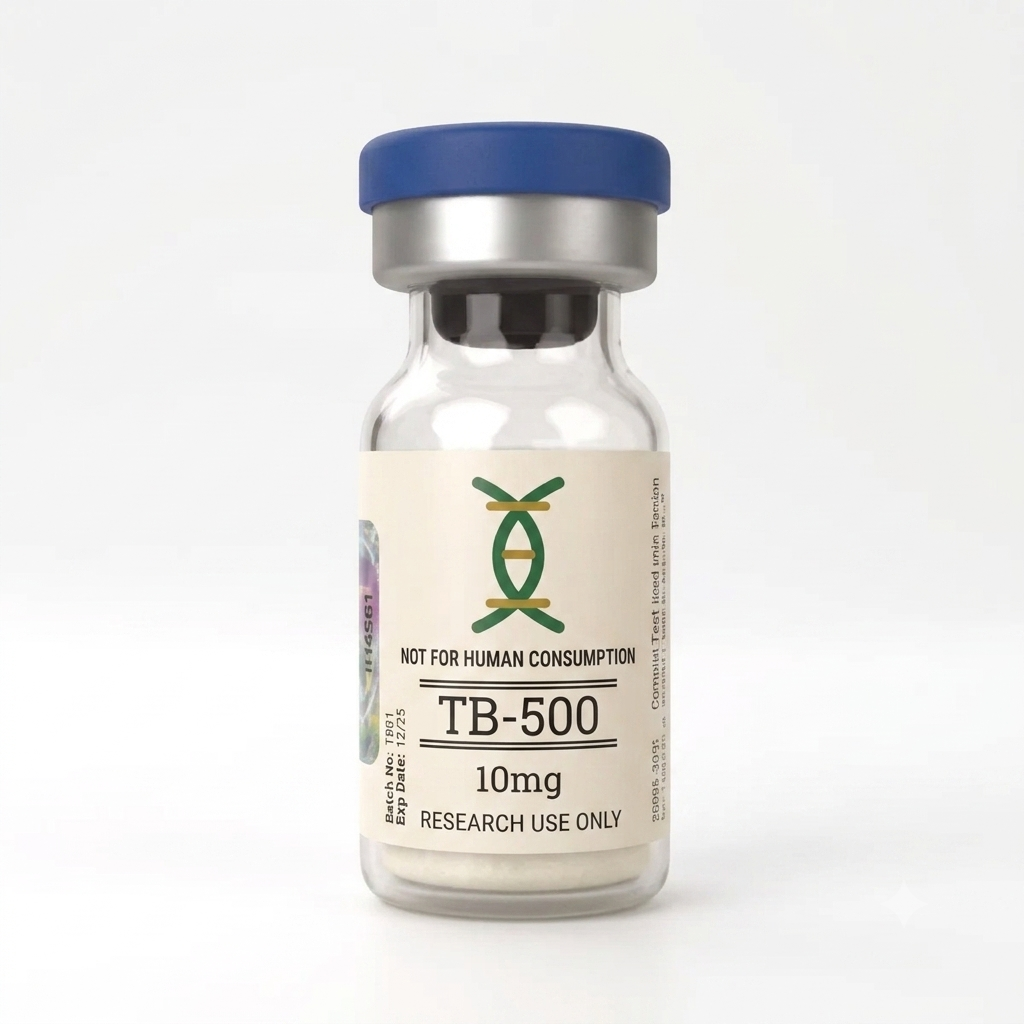
TB-500 is a synthetic peptide corresponding to a bioactive fragment of Thymosin Beta-4, a naturally occurring regenerative protein present in most cell types.
In the research literature, TB-500 has been studied for its role in actin regulation, cell migration, and angiogenesis models, and is frequently referenced alongside other peptides in tissue-repair and recovery research.
Specs: Identity: TB-500 (Thymosin β-4 fragment) · Fill: 10 mg · Form: Lyophilized powder · Purity: ≥98% (HPLC) · Storage: -20°C, protect from light
For research use only. Not for human or veterinary use. Not a drug, food, or dietary supplement. Not for diagnostic or therapeutic use.
Preclinical Research & Case Studies
Mechanism: Corresponds to the actin-binding region (LKKTETQ) of Thymosin Beta-4, a regenerative protein in most cell types. The literature links it to G-actin regulation, cell migration, and angiogenesis (VEGF, HIF-1α).
- Bock-Marquette et al. (2004), Nature (432:466–472): A landmark study reporting that Thymosin Beta-4 activated integrin-linked kinase, promoted cardiac cell migration and survival, and supported cardiac repair after simulated myocardial infarction (reducing infarct size in mice).
Model: Mouse myocardial-infarction model | Source →
- Malinda, Goldstein & Kleinman (1997), FASEB Journal: Established that Thymosin Beta-4 stimulates directed migration of human umbilical-vein endothelial cells — the mechanistic foundation for subsequent angiogenesis research.
Model: Human endothelial cell culture (in vitro) | Source →
- Philp, Goldstein & Kleinman (2004), Mechanisms of Ageing and Development (125:113–115): Reported that Thymosin Beta-4 promotes angiogenesis, wound healing, and hair-follicle development; related work showed accelerated corneal re-epithelialization with reduced ocular-surface inflammation and faster dermal wound healing in rats.
Model: Rat / mouse wound and ocular models | Source →
- Gao et al. (2015), PLoS One: Using Tβ4-overexpressing and knockout mice, hair regrew faster in overexpressing mice (more follicles entering anagen, more shafts) and slower in knockouts, with elevated VEGF and P38/ERK/AKT signaling — evidence that normal Tβ4 is required for typical hair cycling.
Model: Transgenic and knockout mouse hair models | Source →
Research stage: Most mechanism work uses the full 43-amino-acid Tβ4 protein; no completed human efficacy trial of the TB-500 fragment has been published.